Why a Natural Drain Unclogger Is Safer for Your Pipes
A clogged drain always seems to happen at the worst possible time. Before you reach for harsh chemicals that can damage your pipes and irritate your lungs, there’s a safer option. A natural drain unclogger can clear common bathroom clogs caused by hair, soap scum, and buildup using simple household ingredients you probably already have. This go-to method is effective, affordable, and gentle on your plumbing — while still getting the job done.
Classic, and it works when done right
Stronger Natural Option (Great for greasy clogs)
🌬️ For hair-heavy clogs (bathroom drains)
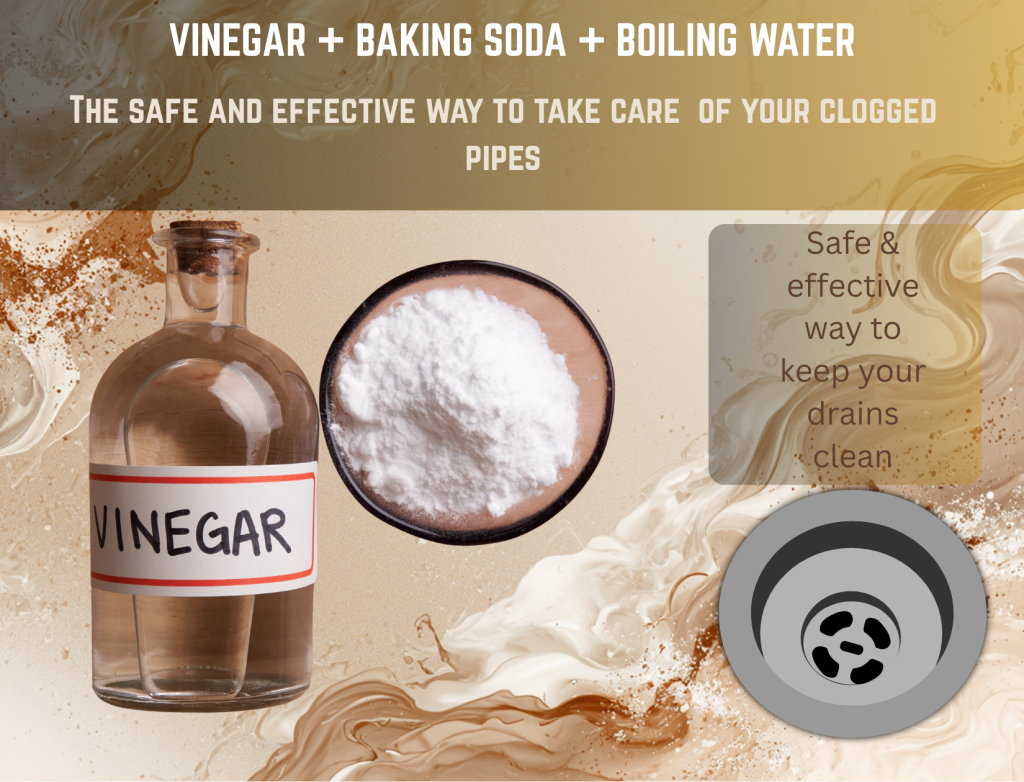
Method 1: Baking Soda + Vinegar + Boiling Water
You’ll need:
- ½ cup baking soda
- 1 cup white vinegar
- A full kettle of boiling water
Steps:
- Pour boiling water down the drain first
(This softens grease — don’t skip this) - Add baking soda directly into the drain
- Slowly pour in the vinegar
- Cover the drain (plug or plate) — traps pressure
- Wait 15–30 minutes
- Flush again with boiling water
👉 Repeat once if needed.
Method 2: Salt + Baking Soda + Boiling Water
This is gentler on pipes and great overnight.
You’ll need:
- ½ cup coarse salt
- ½ cup baking soda
- Boiling water
Steps:
- Mix salt + baking soda
- Pour into drain
- Add boiling water
- Let sit several hours or overnight
- Flush with hot water in the morning
Method 3: Plunger + Hot Water
Simple but wildly underestimated.
- Fill sink/tub with enough water to cover plunger head
- Seal overflow drain with a wet cloth
- Plunge vigorously for 20–30 seconds
- Flush with hot water
(Do this after one of the natural treatments for best results.)
total bathroom blockage means we go mechanical first, chemistry second. Natural stuff can work, but the order matters. Don’t panic — this is fixable more often than not.
🚨 FIRST: Do NOT add more liquids yet
If the water is fully standing:
- ❌ No boiling water yet
- ❌ No vinegar yet
You’ll just flood the floor
STEP 1: Break the seal (most important)
🪠 Proper plunging (this alone fixes many “total” clogs)
You need: a plunger (ideally a flange/toilet plunger)
- Remove as much standing water as you can (bucket or cup)
- Seal the overflow hole (sink/tub) with a wet cloth
- Add enough water to cover plunger head
- Plunge hard and fast for 30–60 seconds
- Pause, listen
- Repeat 2–3 rounds
👉 If water suddenly drops = good sign.
STEP 2: Baking soda + vinegar (pressure version)
Only do this after plunging, or if water has dropped a bit.
You’ll need:
- 1 cup baking soda
- 1–1½ cups white vinegar
- Plug or plate
Steps:
- Dump baking soda straight in
- Slowly add vinegar
- Immediately seal the drain
- Let it foam 30–45 minutes
This creates pressure + dissolves organic gunk.
STEP 3: HOT (not boiling) water flush
⚠️ Important:
- Use hot tap water, not kettle-boiled water
- Especially if pipes are PVC
Slowly pour:
- 1–2 full kettles of hot tap water
STEP 4: Manual removal (if still blocked)
If this is a tub or sink:
- Remove drain stopper
- Pull out hair/slime (it’ll be gross but effective)
If you have one:
- Drain snake / Zip-It tool
This is the #1 natural solution for bathroom clogs
🚩 When to stop and call for help
Water backs up in multiple fixtures
Gurgling from other drains
Sewage smell
Nothing changes after plunging + manual clearing
That usually means a main line issue, not just the bathroom.
🌿 After it clears (important!)
Once flowing:
Hot water + a squirt of dish soap
Then baking soda once a week
Hair catcher installed permanent